Universal Electrode Holder
Product Code : EL-E-10984
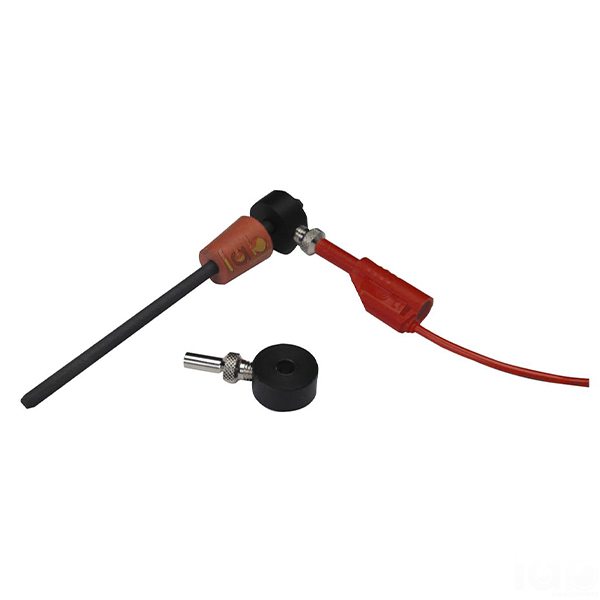
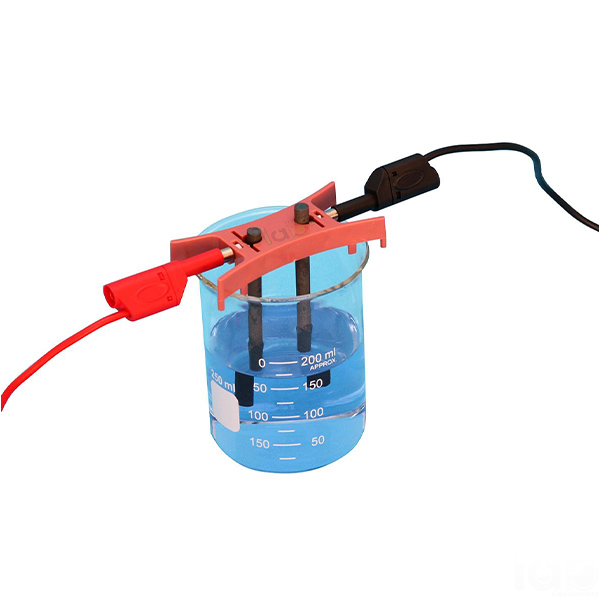
Quick answer: The Universal Electrode Holder sits across the top of a 100 mL or 250 mL glass beaker and holds two electrodes in the electrolyte for electrolysis and electrochemistry experiments. It takes 6-8 mm cylindrical rods such as carbon, or metal strips 19 mm wide, and has corrosion-resistant brass 4 mm sockets. Two carbon electrodes are included. Lab Exports manufactures it in Delhi for schools, colleges and universities.
Specifications
| Parameter | Value |
|---|---|
| Beaker compatibility | Fits 100 mL and 250 mL glass beakers |
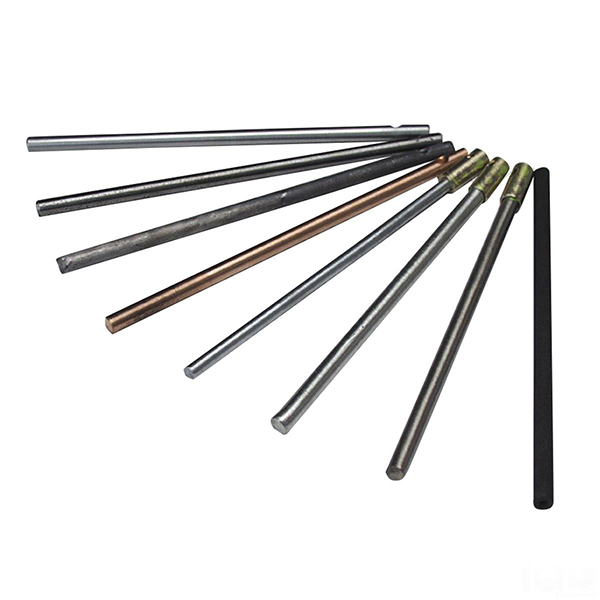
| Cylindrical electrodes | 6-8 mm diameter (e.g. carbon) |
| Strip electrodes | 19 mm wide, 0.8 mm minimum thickness |
| Connectors | Corrosion-resistant brass, 4 mm sockets |
| Included | 2 carbon electrodes |
| Dimensions (L x W x H) | 100 x 40 x 15 mm |
How it is used
The holder turns an ordinary beaker into an electrolysis cell. It spans the rim of a 100 mL or 250 mL glass beaker, and small plastic lugs stop it from slipping. Two electrodes hang down into the solution, each wired through its own brass 4 mm socket, so the circuit to a power supply, lamp or meter is made with standard stackable leads.
- Pour the electrolyte into a 100 mL or 250 mL glass beaker.
- Fit the electrodes: the supplied carbon rods, other 6-8 mm rods, or metal strips 19 mm wide and at least 0.8 mm thick.
- Tighten the setscrew so the carbon rods are held firmly without being crushed.
- Place the holder on the beaker so the plastic lugs locate on the rim.
- Connect 4 mm leads from the brass sockets to the DC supply or meter and start the experiment.
Typical class uses include electrolysis of copper(II) sulphate or sodium chloride solution with carbon electrodes, copper plating with a copper strip, and simple voltaic cells made from two different metal strips in a salt solution.
Key features
- Fits both 100 mL and 250 mL glass beakers, with plastic lugs to prevent slipping
- Takes cylindrical electrodes 6-8 mm in diameter, such as carbon rods
- Also holds flat metal strip electrodes 19 mm wide with a minimum thickness of 0.8 mm
- Corrosion-resistant brass connectors with 4 mm sockets for stackable lab leads
- Setscrew that holds carbon electrodes firmly without crushing them
- Compact 100 x 40 x 15 mm body, supplied with two carbon electrodes
Documentation and supply
Most Lab Exports products carry a one-year manufacturer warranty.
Lab Exports manufactures the Universal Electrode Holder at its works in Laxmi Nagar, Delhi, and supplies it to schools, colleges and universities in India and 60+ countries, handling the export documents for each shipment. More about the company is on the About Lab Exports page.
Related Electrolysis products
- Electrode Connector (EL-E-10983)
- Daniell Cell (EL-E-10985)
- Electrolysis Cells (EL-E-10982)
- Fruit Clock (EL-E-10981)
- Salt Bridge (EL-E-10980)
- Simple Cell, Student Kit (EL-E-10979)
The full range is in the Electrolysis section of the Chemistry Lab range.
Frequently asked questions
What electrodes can the Universal Electrode Holder take?
Cylindrical electrodes of 6-8 mm diameter, for example carbon rods, and metal strip electrodes 19 mm wide and at least 0.8 mm thick. Two carbon electrodes are supplied with the holder.
Which beakers does it fit?
It is sized for 100 mL and 250 mL glass beakers, and small plastic lugs keep it from sliding off the rim.
What is the price of the Universal Electrode Holder?
Prices are not published on the website. Add the Universal Electrode Holder to the Enquiry Cart with the Add To Cart button on this page, or email [email protected] with the house code EL-E-10984 and the quantity, to receive a quotation.
Does Lab Exports manufacture the Universal Electrode Holder?
Yes. Lab Exports manufactures the Universal Electrode Holder at its works at 11/315, Lalita Park, Laxmi Nagar, Delhi 110092, under house code EL-E-10984.
Request a quote
Email [email protected] with the house code EL-E-10984 and the quantity, or add the Universal Electrode Holder to the Enquiry Cart with the Add To Cart button on this page. Tender buyers can also see the Tenders and OEM page.