Electrolysis Cells
Product Code : EL-E-10982
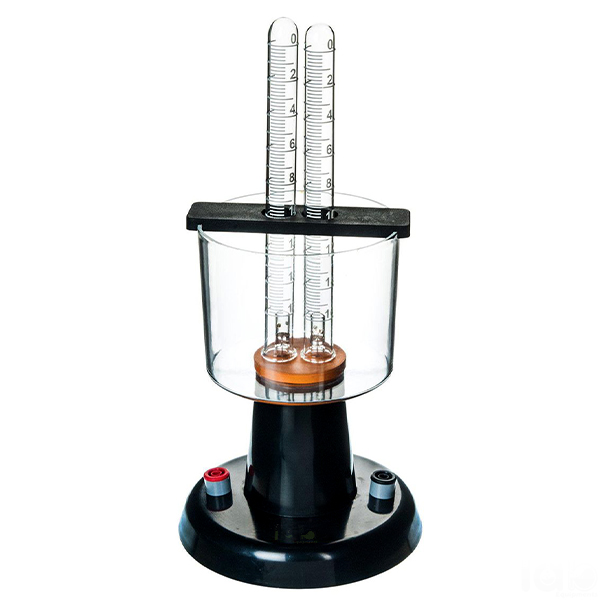
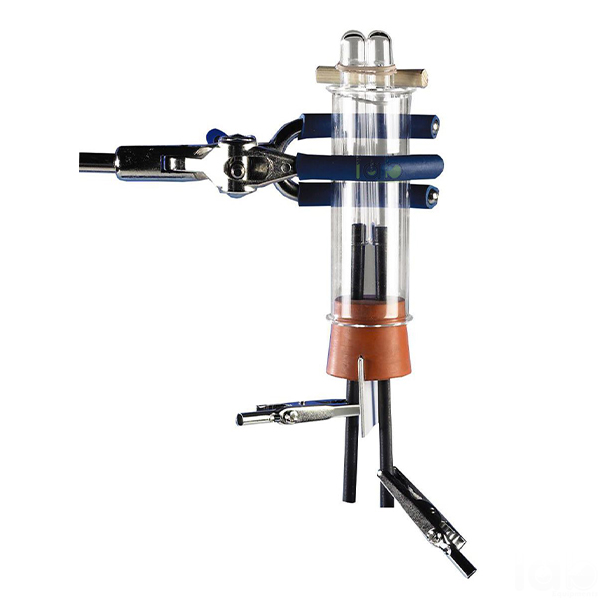
Quick answer: The Electrolysis Cell is a small glass electrolysis apparatus for showing how a direct current splits an electrolyte and for collecting the gas formed at each electrode. It has a 75 x 25 mm glass cylinder, a 2-hole rubber stopper carrying two carbon electrodes, and two 75 x 10 mm collection tubes. Lab Exports manufactures it in Delhi for schools, colleges and universities.
Specifications
| Component | Specification |
|---|---|
| Glass cylinder | 75 x 25 mm |
| Stopper | 2-hole rubber stopper |
| Electrodes | 2 carbon electrodes per cell |
| Gas collection tubes | Two 75 x 10 mm test tubes, suspended by wood and rubber bands |
| Electrical contact | Crocodile clips |
| Short-circuit protection | Insulating material placed between the electrodes |
How the electrolysis experiment is done
Electrolysis uses a direct current to drive a chemical change that would not happen on its own. Positive ions move to the cathode and gain electrons (reduction), while negative ions move to the anode and lose electrons (oxidation). Carbon electrodes are chosen because they conduct well and take no part in most school electrolyses, so the products come from the electrolyte.
- Fill the glass cylinder with the electrolyte chosen by the teacher, for example water made conducting with a little dilute sulphuric acid.
- Fill the two 75 x 10 mm test tubes with the same liquid and invert one over each carbon electrode, held by the wood and rubber-band support.
- Connect the electrodes to a low-voltage DC supply with the crocodile clips, keeping the insulating piece in place between them.
- Switch on and watch bubbles rise into each tube; compare the volumes collected over the cathode and the anode.
- Switch off and test the gases: hydrogen burns with a squeaky pop and oxygen relights a glowing splint.
With acidified water the volume of gas over the cathode (hydrogen) is close to twice that over the anode (oxygen), matching the equation 2H2O -> 2H2 + O2. Repeating the run with other electrolytes shows students how the products change with the ions present.
Key features
- Compact 75 x 25 mm glass cylinder that needs only a small volume of electrolyte for each run
- Two-hole rubber stopper that keeps the pair of carbon electrodes upright and a fixed distance apart
- Carbon electrodes that are not consumed in routine electrolysis, so the cell can be reused
- Two 75 x 10 mm test tubes suspended over the electrodes to collect the gas from each side separately
- Crocodile clip connections for quick wiring to a DC supply
- Insulating material between the electrodes to prevent short circuiting
Documentation and supply
Instructions for use are supplied with the apparatus. Most Lab Exports products carry a one-year manufacturer warranty.
Lab Exports manufactures the electrolysis cell at its works in Laxmi Nagar, Delhi, and supplies it to schools, colleges and universities in India and 60+ countries, handling the export documents for each shipment. More about the company is on the About Lab Exports page.
Related Electrolysis products
- Fruit Clock (EL-E-10981)
- Electrode Connector (EL-E-10983)
- Salt Bridge (EL-E-10980)
- Universal Electrode Holder (EL-E-10984)
- Simple Cell, Student Kit (EL-E-10979)
- Daniell Cell (EL-E-10985)
The full range is in the Electrolysis section of the Chemistry Lab range.
Frequently asked questions
What gases are collected in the electrolysis cell?
With water acidified with dilute sulphuric acid, hydrogen collects over the cathode and oxygen over the anode, in a volume ratio close to 2:1. Each gas rises into its own 75 x 10 mm test tube.
Why does the cell use carbon electrodes?
Carbon conducts electricity and does not dissolve into the electrolyte in routine school experiments, so the gases and deposits come from the solution being electrolysed. Each cell has two carbon electrodes.
What is the price of the electrolysis cell?
Prices are not published on the website. Add the electrolysis cell to the Enquiry Cart with the Add To Cart button on this page, or email [email protected] with the house code EL-E-10982 and the quantity, to receive a quotation.
Does Lab Exports manufacture the electrolysis cell?
Yes. Lab Exports manufactures the electrolysis cell at its works at 11/315, Lalita Park, Laxmi Nagar, Delhi 110092, under house code EL-E-10982.
Request a quote
Email [email protected] with the house code EL-E-10982 and the quantity, or add the electrolysis cell to the Enquiry Cart with the Add To Cart button on this page. Tender buyers can also see the Tenders and OEM page.