Lift Pump
Product Code : EL-POM-10377
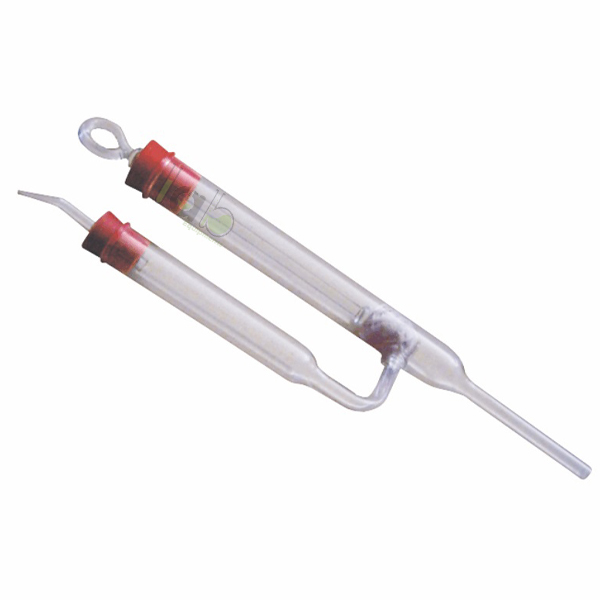
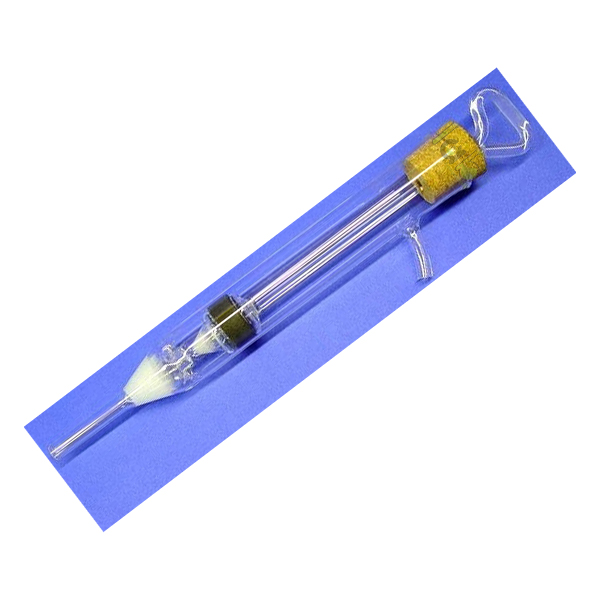
Quick answer: The lift pump working model shows how a common lift pump raises water using atmospheric pressure and one-way valves. Made of glass, it has a cylinder and piston fitted with non-return float valves and a side outlet tube, so students can watch the valves open and close and the water rise with each stroke. Lab Exports manufactures it in Delhi for schools, colleges and universities.
Specifications
| Item | Specification |
|---|---|
| Material | Glass |
| Components | Cylinder, piston, non-return float valves and side outlet tube |
| Type | Working model |
How the lift pump works
A lift pump has two one-way valves: one at the foot of the cylinder and one in the piston. On the upstroke the piston valve closes and the space below the piston grows, so the pressure there falls, and atmospheric pressure acting on the water outside pushes water up through the foot valve into the cylinder. On the downstroke the foot valve closes and the water passes up through the valve in the piston. On the next upstroke the water above the piston is lifted and flows out of the side tube, while fresh water is drawn in below.
- Stand the lower end of the model in a beaker or trough of water.
- Work the piston up and down steadily.
- Watch the foot valve open on the upstroke and the piston valve open on the downstroke.
- Continue until water flows from the side outlet tube, and note that it flows mainly on the upstroke.
Because the water is pushed up by atmospheric pressure, a lift pump cannot raise water through more than about 10 m of suction height even in theory, and less in practice. This limit is a useful discussion point when the lift pump is compared with the force pump.
Key features
- Glass construction for a clear view of the valves and the water inside the cylinder
- Non-return float valves that show one-way flow at each stroke
- Working piston that students can operate by hand
- Side outlet tube where the lifted water is delivered
- Pairs naturally with the force pump model for comparing the two pump types
Documentation and supply
Most Lab Exports products carry a one-year manufacturer warranty.
Lab Exports manufactures the lift pump model at its works in Laxmi Nagar, Delhi, and supplies it to schools, colleges and universities in India and 60+ countries, handling the export documents for each shipment. More about the company is on the About Lab Exports page.
Related Properties of Matter products
- Bourdon Gauge (EL-POM-10376)
- Force Pump (EL-POM-10378)
- Boyles Law Apparatus, Advanced with Oil (EL-POM-10375)
- Fluid Pressure Apparatus, Hydraulic Press (EL-POM-10379)
- Charles Law Apparatus, Basic (EL-POM-10374)
- Kinetic Theory Apparatus (EL-POM-10380)
The full range is in the Properties of Matter section of the Physics Lab range.
Frequently asked questions
What does the lift pump model demonstrate?
It demonstrates how a lift pump uses atmospheric pressure and two one-way valves to raise water through a cylinder.
What is the difference between a lift pump and a force pump?
A lift pump raises water that then flows out at the level of its outlet, while a force pump pushes water out under pressure so it can be delivered above the pump.
What is the model made of?
The model is made of glass, so the valve action and the water movement can be seen directly.
What is the price of the lift pump model?
Prices are not published on the website. Add the lift pump model to the Enquiry Cart with the Add To Cart button on this page, or email [email protected] with the house code EL-POM-10377 and the quantity, to receive a quotation.
Does Lab Exports manufacture the lift pump model?
Yes. Lab Exports manufactures the lift pump model at its works at 11/315, Lalita Park, Laxmi Nagar, Delhi 110092, under house code EL-POM-10377.
Request a quote
Email [email protected] with the house code EL-POM-10377 and the quantity, or add the lift pump model to the Enquiry Cart with the Add To Cart button on this page. Tender buyers can also see the Tenders and OEM page.
.jpg)